designer, researcher, educator, activist
PHL DESIGN LAB: social sector design
LEARNING SESSION: workshop design and facilitation
BORDER STORIES: design innovation and citizenship
DEGREE SHOW: exhibition design
NHS INFORM FOOD: design research
GLASGOW AS SANCTUARY: activist design
SHIFTING RHYTHMS: community development
NGP VAN: ux/ui design and development
DOULA DESIGN: curriculum design
SEXUAL HEALTH VENDING MACHINE: feminist design
BORDER STORIES
MAY 2018-AUGUST 2018
how can we reimagine the performance of borderlands?
BACKGROUND
why border stories
‘Border Stories’ is a reimagining of the experience of the Scottish-English borderlands through objects and interactions, asking people to reconsider what borders could mean.
Today, even though the world is becoming more ‘globalized’ through increased flows of capital and technology, more physical borders are being built than ever before. These borders are often unsuccessful in fulfilling their functional purpose, and are instead serving a performative role for the country that created them. This performativity occurs on three different levels: the symbolic, the narrative, and the imaginary. ‘Border Stories’ is a set of counter symbols which visualizes a different border manifestation, hopefully leading to an upward ripple that affects the imaginary.
The Scottish-English borderland provides a unique case study and one of timely importance. The fate of the relationship between Scotland and England is in flux post independence and Brexit referendums. Understanding what the border between England and Scotland means and could mean is, therefore, extremely relevant as it will serve as the face of Scotland to the rest of the world. ‘Border Stories’ not only brings people to the border area, but also prompts them to think of borders as social constructions rather than inherent systems, making the abolition of borders a closer possibility.
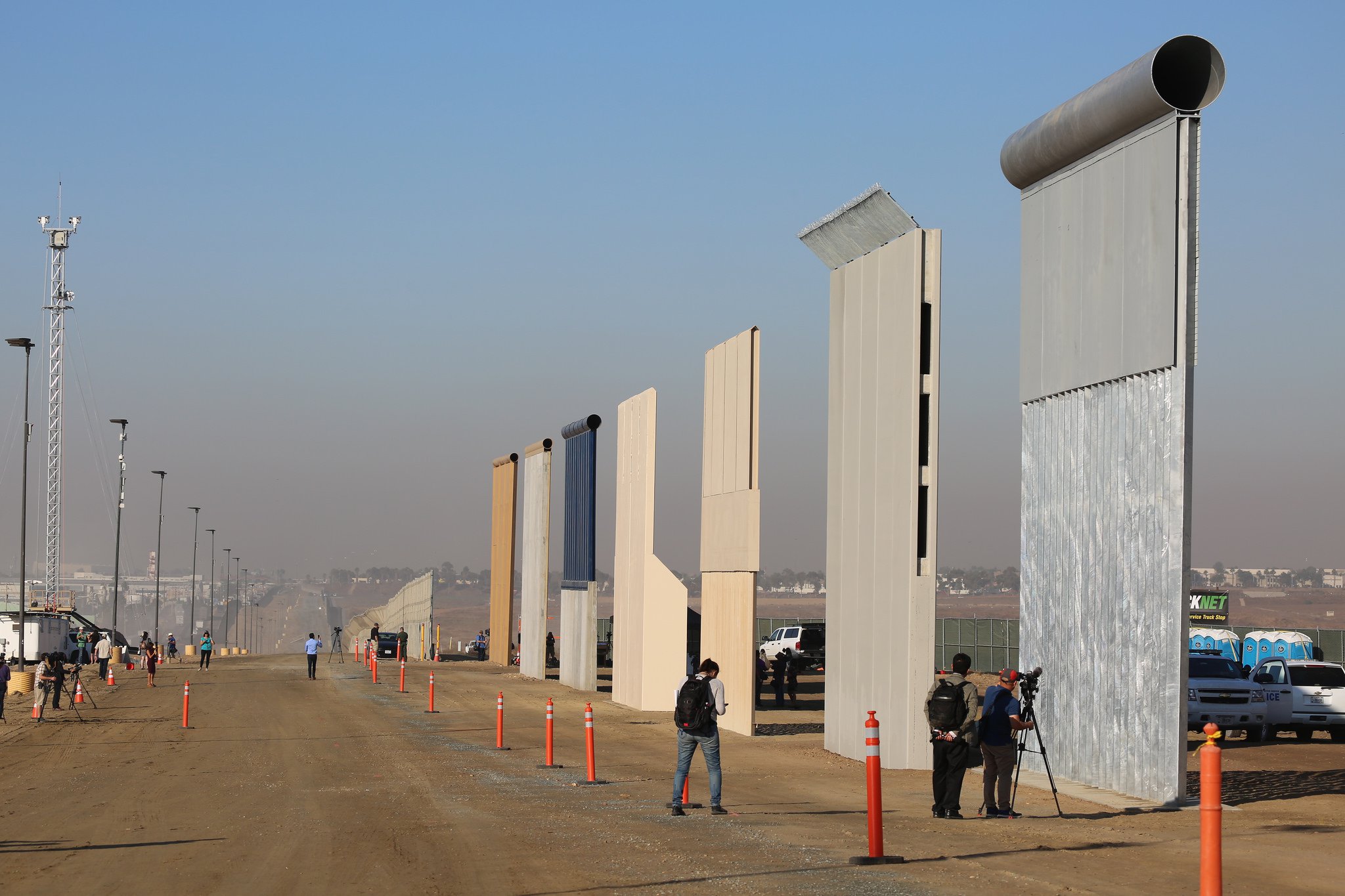
Photo from New York Times article about Mexico-US border wall prototypes
TAXONOMY OF THE PERFORMATIVITY OF BORDERS
understanding how borders perform
Because borders do not achieve their functional purposes, I wanted to look at the performativity of borders and how they work theatrically. As such, I took the idea of performativity front gender theory and applied it to the idea of borders. The theorist Judth Butler talks of ‘acts’ that people do (such as speech, behaviors, laws, habits, etc.) that constantly reinscribe a certain social construct into how society works. For this project, I wanted to understand what sort of ‘acts’ individuals and states perform in order to create borders as part of everyone’s everyday consciousness, making borders seem inherent rather constructed.
To organize my information and research, I decided to create a taxonomy of the different ways a border performs. This allowed me to classify my information into both large categories and smaller sub-categories, creating relationships between different manifestations of bordering that happen globally. I used a structure similar to Linnaeus’ classification of natural kingdoms to relate these contexts. Using this rank-based from of scientific classification allows me to relate concepts and phenomenon to each other. The highest level includes the performativity of bordering in the physical sense and epistemological bordering, which exists much more as a way of thinking. The categories within these are the symbolic, narrative, and imaginary, which is where much of the analysis was done in terms of interventions and changes within this system.
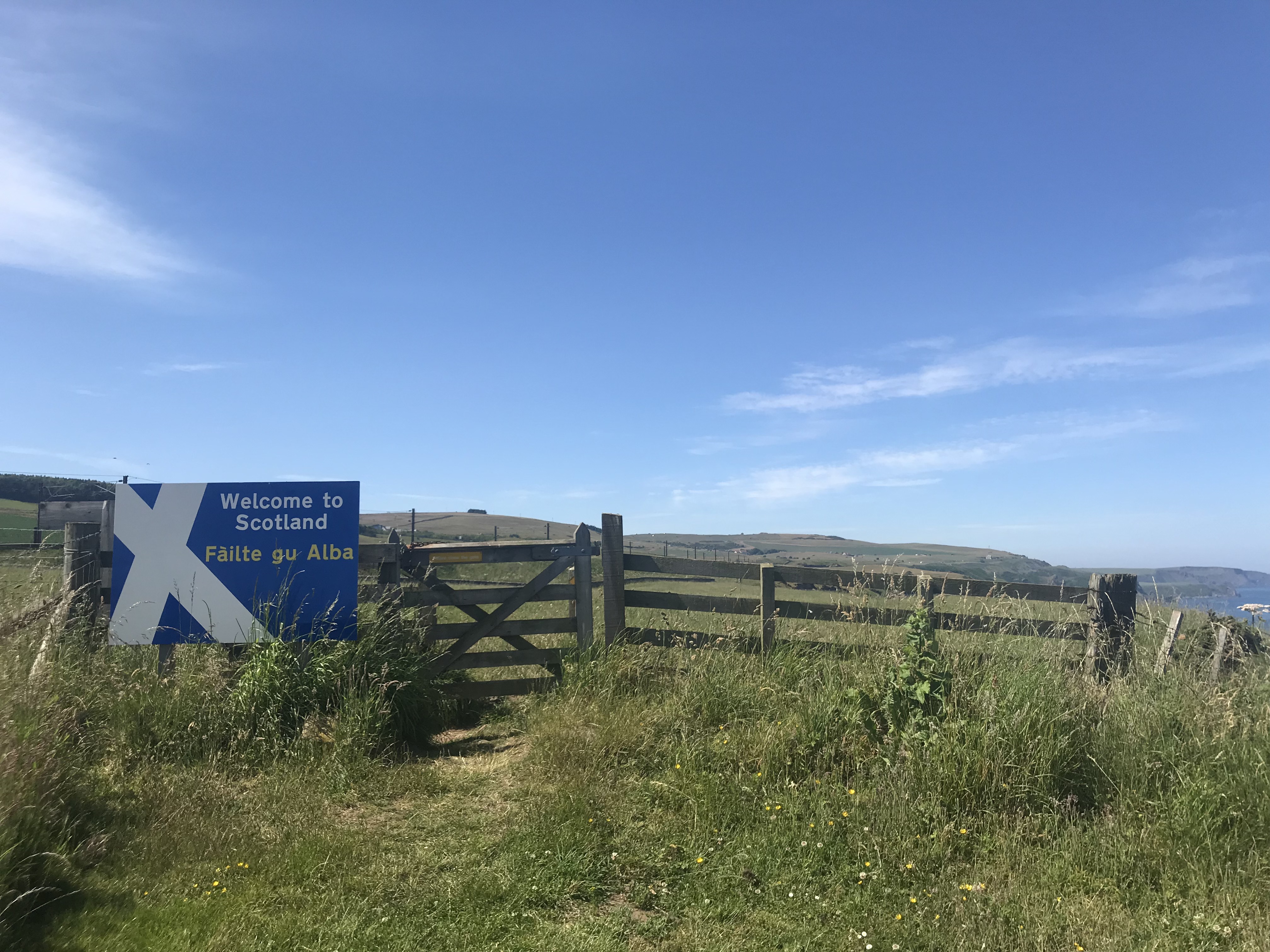
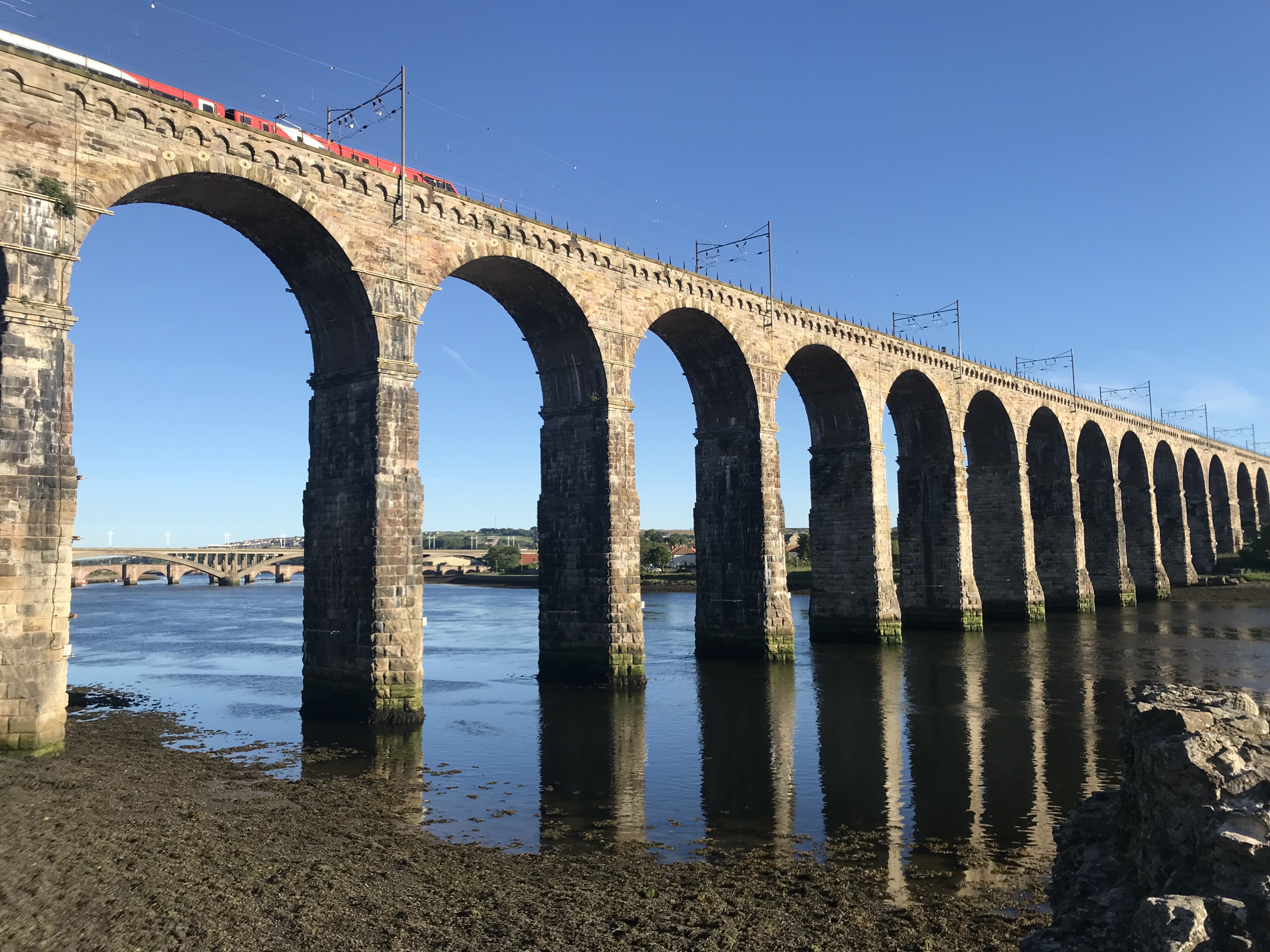
THE SCOTTISH-ENGLISH BORDER
grounding my work in the context
The border between Scotland and England can serve as a test case to start conversations around nation-state borders more generally. It is not like many others: the two are not independent from one another, although certain policies are devolved between the two governments. Neither one of the countries is at war with each other and while the independence referendum may have sparked a succession movement in Scotland, they are not actively seeking their independence through violence. However, this region has a rich history, one marred by bloody conflict that can be seen etched in the landscape itself. Now, after 300 year of peace and a ‘fixed’ border, the border is more symbolic, demonstrating the differences between the two peoples as well as the creation of a ‘cross-border’ Anglo-Scottish border identity.
Today, in this post-Brexit landscape, more powers are going to get devolved between England and Scotland so everyday lives across the border may change drastically. The future is uncertain; we do not know what the border between England and Scotland will look like in 2, 5, 10, 15 years. However, “there’s a sense, the border between Scotland is important and there’s that sense of the line again,” and these proactive conversations around the border can get people to imagine what its future manifestation could be.

DIRECTION: BORDER STORIES
coming up with an intervention
From insights gained both from the taxonomy as well as engagements and workshop, I then brainstormed design directions. In the taxonomic framework of symbolic, narrative, and imaginary, the symbolic is at the base, so it provides an entry point for a design intervention (see below). During my conversations with people living and working on the border and through the workshop, I kept hearing that this particular border between Scotland and England is very different from other borderlands. However, when looking at its performativity through the taxonomy, it looked similar to many others. I began to think about ways in which the symbolic could be changed, at this base semiotic level in order to influence an upward change towards viewing the border differently more generally.
From this came Border Stories. Border Stories is an initiative that would be put together through a partnership of several local and national organizations. It would include tourist organizations (such as Visit Scotland and the Scottish Borders Tourism Partnership), arts organizations (both local museums such as Tullie House and national grant providers such as Creative Scotland), and governmental organizations (coalitions such as the Borderlands Growth Deal as well as local councils such as the Scottish Borders Council or the Carlisle Council). These sets of organizations would come together to create Border Stories, a set of counter symbols embedded within the Scottish-English borderlands, highlighting the paradoxes and inconsistencies of the performativity of the border, as shown in the insights gathered in part three. The eight symbols are not static but rather interactive in nature, some using multiple senses. They provide several entry points into the entire framework of Border Stories. Together they form a trail along the Scottish-English border which encourages interactive and sustained engagement.
You can view my final report below: